Why Brands Are Turning Their Employees into Content Creators in 2026
Discover why brands are turning employees into content creators in 2026, how employee-generated content builds trust and engagement, and what businesses can learn from companies like Starbucks, Staples and Hilton.

So you're scrolling through TikTok or Instagram and coming across videos of employees dancing in their workplace. Another video shows a staff member introducing their colleagues, while someone else is demonstrating a product or participating in a trending challenge.
You probably stop to watch, laugh, or even share the video.
But have you ever wondered why so many businesses are allowing their employees to become part of their social media content?
From retail stores and restaurants to technology companies and growing startups, businesses are finding creative ways to involve their staff in building an online presence.
And no, this doesn't mean social media managers are becoming irrelevant.
Many brands still have dedicated social media managers, marketing teams, and professional content creators responsible for their online presence. However, they are increasingly recognizing that their employees can also contribute to the content people see on their social media pages.
A receptionist can participate in a trending video. A salesperson can demonstrate a product. A developer can explain a new feature. Even an employee who simply enjoys making funny videos can become a familiar face associated with a brand.
The idea is simple: make the brand more visible, relatable, and recognisable.
So, why are businesses embracing this approach in 2026?
Let's explore.
- Employee-Generated Content Is Becoming a Bigger Part of Social Media Marketing Before going further, let's understand what employee-generated content means.
Employee-generated content (EGC) refers to photographs, videos, posts, and other forms of content created by people who work for an organisation. This content may showcase the workplace, products, services, employees, company culture, or everyday activities within the business.
For example, a restaurant has a dedicated social media manager. The social media manager plans the content calendar, writes captions, edits videos, monitors engagement, and manages the restaurant's Instagram and TikTok accounts.
However, the restaurant also has employees who participate in short videos, introduce new menu items, show how meals are prepared, or join popular social media trends. The social media manager still handles the strategy. The employees simply become additional faces and contributors to the brand's content.
This is what makes employee-generated content interesting.
It allows businesses to involve more people in their online storytelling without necessarily changing their existing marketing structure.
- Why Are Businesses Involving Their Employees in Content Creation There are several reasons businesses are exploring this approach.
a.People Want to See the Human Side of Brands: Think about the last time you discovered a new business online.
Did you only want to see its logo, product photographs, and promotional graphics? Or were you also interested in seeing the people behind the business?
Today's social media audiences encounter advertisements regularly. Sometimes, a simple video showing employees enjoying their work or explaining what happens behind the scenes can make a business more approachable.
For instance, a clothing store could have employees model new arrivals. A restaurant could feature its kitchen staff preparing popular meals. A technology startup could introduce its developers and show how its products are built.
These small moments help audiences connect with the people behind the brand.
b.It Creates More Opportunities for Brand Awareness. Because, not every social media post needs to be a detailed product advertisement.
Most times, the goal is simply to make people recognize that your business exists.
An employee participating in a trending challenge, sharing a funny workplace moment, or introducing a new product can attract attention from people who might never have discovered the brand otherwise. When audiences recognise the employees, they may also begin recognizing the business.
This is particularly useful for startups and small businesses trying to establish their presence in competitive markets.
c.Employees Bring Different Personalities to the Brand: Imagine a company with 20 employees. One person is naturally funny. Another enjoys explaining things. Someone else is comfortable dancing on camera, while another has a talent for storytelling.
Why should all the brand's social media content come from one person? With appropriate guidance, businesses can allow employees to contribute according to their interests and personalities.
The result can be a more varied content experience rather than a social media page where every post looks and sounds the same.
d. It Can Help Brands Participate in Trends More Naturally: Social media trends move quickly. From popular sounds and dance challenges to funny workplace situations, there are countless opportunities for brands to participate in conversations.
Employees can help bring these trends to life. Rather than creating every video around a formal marketing script, a business can involve staff members in content that feels more natural and entertaining.
Of course, trends should still align with the brand's identity and audience. Not every viral challenge is suitable for every organisation.
- Real Brands That Have Embraced Employee-Generated Content This approach isn't just something small businesses are experimenting with. Well-known companies have also found ways to involve employees in their social media storytelling.
Let's look at some real examples:
Starbucks: Giving Baristas a Bigger Role in Brand Storytelling
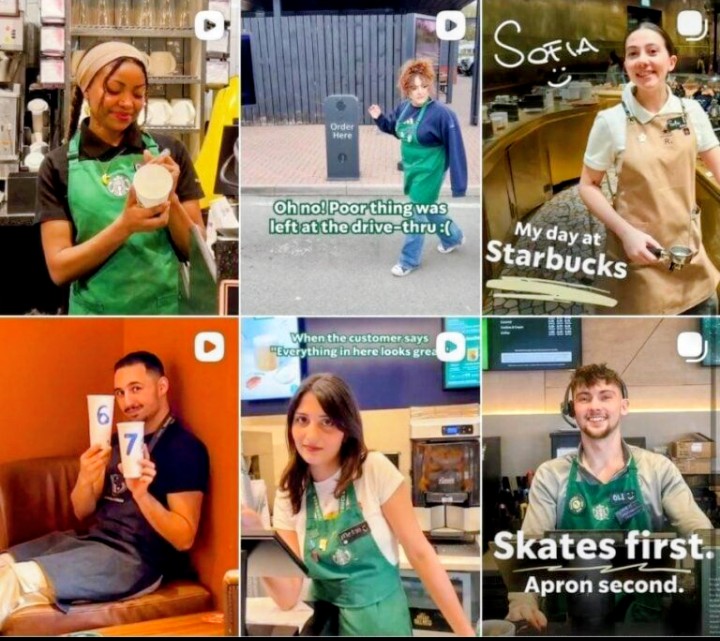
Caption: Starbucks baristas are becoming part of the brand's social media storytelling strategy.
Starbucks baristas are becoming part of the brand's social media storytelling strategy. Starbucks offers an interesting example of how employees can become part of a company's content strategy.
Through its Green Apron Creators initiative, the company gives selected baristas an opportunity to create authentic social media content about their experiences working at Starbucks.
In 2024, Starbucks began piloting its Green Apron Creators programme, giving selected baristas opportunities to create authentic social media content about working at Starbucks.
In November 2025, the company also introduced its Global Coffee Creators, including Starbucks barista Josiah, to share stories about coffee, culture, and communities.
The company subsequently announced a TikTok Creator Network pilot in June 2026 to expand employee-led content.
What does this tell us?
The people who interact with customers and work with the products every day can have interesting stories to share.
A barista can demonstrate a drink, show a behind-the-scenes moment, or share an experience that helps audiences connect with the brand.
Checkout PostSpread:(https://postspread.com/)
Staples: When an Employee Becomes a Recognisable Face of a Brand
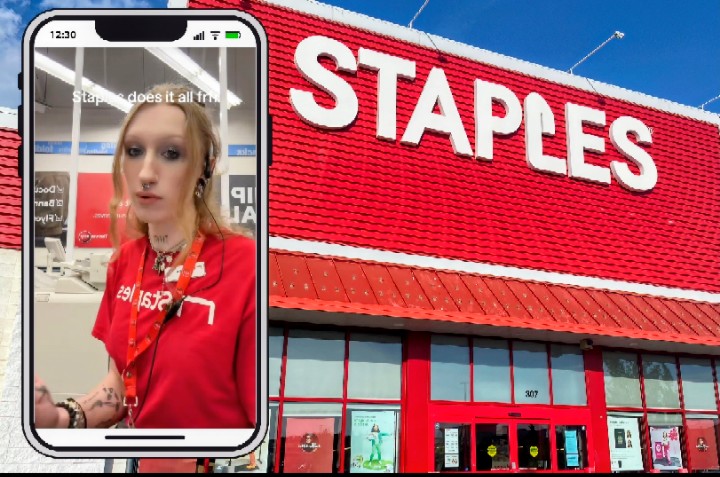
Caption: Kaeden Rowland, a Staples employee whose TikTok videos brought unexpected attention to the retailer.
Here's another interesting example.
Staples, the American office supplies retailer, gained attention through videos created by an employee known online as the Staples Baddie. Kaeden Rowland(staples baddie) shared entertaining videos about her workplace, showcasing products and services that many customers didn't even know Staples offered. Her videos attracted millions of views, with some viewers even expressing interest in visiting their local Staples stores after watching her content. What makes this example particularly interesting is how the company responded. Rather than discourage her creativity, Staples acknowledged her popularity and explored opportunities to support and collaborate with her. This shows that employees don't necessarily need to be professional influencers to create content that attracts attention. Sometimes, an employee's personality, creativity and familiarity with the business can become an unexpected marketing advantage.
Source: Fast Company –(https://www.fastcompany.com/91495470/staples-baddie-gen-z-employee-what-the-retailer-is-doing-about-internet-fame)
Hilton: Turning an Employee's Personality into Brand Content
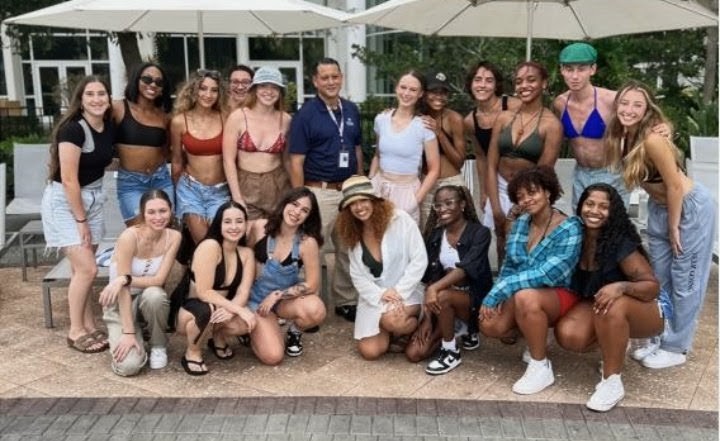
Caption: Hilton employee Alvaro Lopez during the Team Member Flash Mob campaign
Hilton, the global hospitality company, offers another interesting example.
A guest recorded _Alvaro Lopez, a Hilton employee, dancing while carrying out his duties at the Hilton Orlando Convention Center. The video attracted attention online, and Hilton saw an opportunity to turn the moment into a brand story. The company organized a surprise flash mob in his honour and shared the experience across its social media platforms. The campaign generated 1.4 million organic TikTok views. This shows how an employee's everyday personality and workplace experiences can become engaging brand content. Source: Watch the Hilton employee campaign on YouTube.
These examples demonstrate different approaches, but they share one important idea: employees can contribute to brand awareness in ways that traditional promotional content may not always achieve.
Source:(https://youtube.com/shorts/7S1QmqgV4oY?si=kjlIZWisVU0NnC6y)
- What Types of Content Can Employees Create? You don't have to own a large company or employ professional actors to explore this strategy.
Even a small startup can involve its employees in simple content creation.
Here are some ideas: a. Workplace dance videos: Employees can participate in suitable trending dances or sounds. These videos can make the brand feel more approachable and entertaining.
b. Behind-the-scenes videos: Show what happens during a typical workday, how products are prepared, or what goes into delivering a service.
c. Employee introductions: Introduce different team members and allow audiences to understand their roles within the organisation.
d. Product demonstrations: Let employees demonstrate how products work or explain their favourite features.
e. Funny workplace moments: Share relatable, light-hearted situations that employees and customers can connect with, provided they respect workplace boundaries.
f. Day-in-the-life videos: Allow staff members to show what their typical working day looks like.
g. Educational content: Employees can share useful knowledge related to their roles. A developer can explain a technical concept, while a customer support representative can answer common customer questions.
h. Trend participation: Employees can help brands participate in relevant TikTok and Instagram trends without making every post feel like a formal advertisement.
The important thing is to create content that reflects the organisation's personality and objectives.
- Does This Mean Social Media Managers Are No Longer Needed? Absolutely not.
This is where businesses need to understand the difference between employee participation and professional social media management.
A company can have a social media manager and still encourage its employees to create content.
In fact, having both can make the content strategy more effective. Consider a startup with a marketing team.
The social media manager may be responsible for:
- Developing social media strategy.
- Planning the content calendar.
- Researching trends and content ideas.
- Writing captions and preparing graphics.
- Recording or editing videos.
- Managing publishing schedules.
- Monitoring comments and messages.
- Reviewing analytics and measuring performance, etc
Meanwhile, employees can contribute by:
- Appearing in short videos.
- Participating in workplace trends.
- Demonstrating products.
- Sharing professional knowledge.
- Introducing colleagues.
- Creating behind-the-scenes content, and so on.
The social media manager coordinates the contributions, also ensures they align with the brand's objectives, while managing the publishing process.
This means employees aren't necessarily replacing the marketing team. They are giving the marketing team more opportunities to tell the brand's story.
For smaller startups without a dedicated social media manager, employees may also contribute more informally, with an assigned person overseeing the process.
6 How Can Businesses Encourage Employees to Create Content Having employees participate in social media content creation sounds exciting, but it requires some planning.
Businesses should avoid making content creation feel like an unexpected responsibility added to everyone's job description.
Here are a few practical ways to introduce it;
Identify willing participants: Start with employees who are comfortable appearing in videos or contributing ideas. Participation should be voluntary and supported by clear expectations.
Make content creation simple: Not every video needs professional lighting, expensive cameras, or complicated editing. A smartphone and a good idea can be enough.
Give employees creative freedom: Allow employees to express their personalities while maintaining reasonable brand guidelines.
Establish content boundaries: Make sure employees understand what they can share publicly. Protect customer information, confidential business details, and workplace privacy.
Recognize their contributions: Appreciate employees who contribute ideas, appear in videos, or help create engaging content. If content creation becomes a formal additional responsibility, discuss appropriate compensation and recognition.
Have a publishing plan. Decide who will review the content, when it will be published, and which platforms are appropriate.
A little organization can prevent confusion and make the process more enjoyable for everyone.
- The Bigger Challenge: Managing All That Content
Now, your business has embraced this idea. Your employees are participating in videos, sharing product demonstrations, and creating behind-the-scenes content.
Your social media manager is also preparing graphics, writing captions, researching trends, and planning the next campaign.
Contents are coming from different people, and everything needs to be organized before publication.
How do you keep track of it all?
Without a proper system, content can easily become scattered.
A video might be ready, but nobody remembers its publishing date. A caption is approved, but the accompanying graphic is missing. Another post might be published twice because the team has lost track of its content calendar.
This is why content planning remains important, even when employees are involved in creating the content.
Businesses need to organize their ideas, prepare their posts, and establish a consistent publishing routine.
Visit PostSpread:(https://postspread.com)
- How PostSpread Can Help Businesses Manage Their Social Media Content
Having employees contribute to your social media presence can give your brand more content opportunities.
However, creating content is only one part of the process. You also need to organize and publish it consistently.
This is where Post spread comes in.
PostSpread is a social media management and scheduling platform that helps users organize and schedule their social media content.
For a business with a dedicated social media manager, it can support the process of planning and scheduling posts across social platforms.
For a startup with a smaller team, it can help make social media publishing more organized.
Imagine collecting videos from employees throughout the week, preparing captions, creating graphics, and deciding when each piece of content should go live.
Rather than handling every post at the last minute, you can plan your posting activities ahead of time. This gives your team more room to focus on creating meaningful content, engaging with customers, and developing new ideas.
Whether you're managing a growing startup, a retail business, or an established organisation, having an organized approach to social media publishing can make a difference.
Ready to organize your social media content? Try PostSpread for free: (https://postspread.com/)
I end here, and leaving you with no doubt that, Your Employees Can Help Tell Your Brand's Story.
Social media marketing is no longer limited to promotional graphics, product advertisements, and carefully designed corporate announcements.
Brands are exploring more human ways to connect with their audiences. And sometimes, the people who can help make that connection are already working within the organisation.
A staff member participating in a dance trend, a salesperson demonstrating a product, or an employee sharing a behind-the-scenes video can help people discover and remember a business.
This doesn't mean every employee needs to become an influencer or that social media managers are no longer important. It simply means businesses have more opportunities to involve their people in building brand awareness.
So, the next time you see an employee dancing in a company's TikTok video or introducing a product on Instagram, remember that it may be part of a much bigger content strategy.
Use PostSpread for free:(https://postspread.com/)