Hootsuite vs. Postspread: Why Modern Creators Are Switching

Introduction
Social media management has changed a lot over the past few years. What once worked for posting a few updates each week is no longer enough. Creators, agencies, and brands now manage multiple platforms, clients, and content formats at the same time. Because of this shift, the tools people rely on matter more than ever.
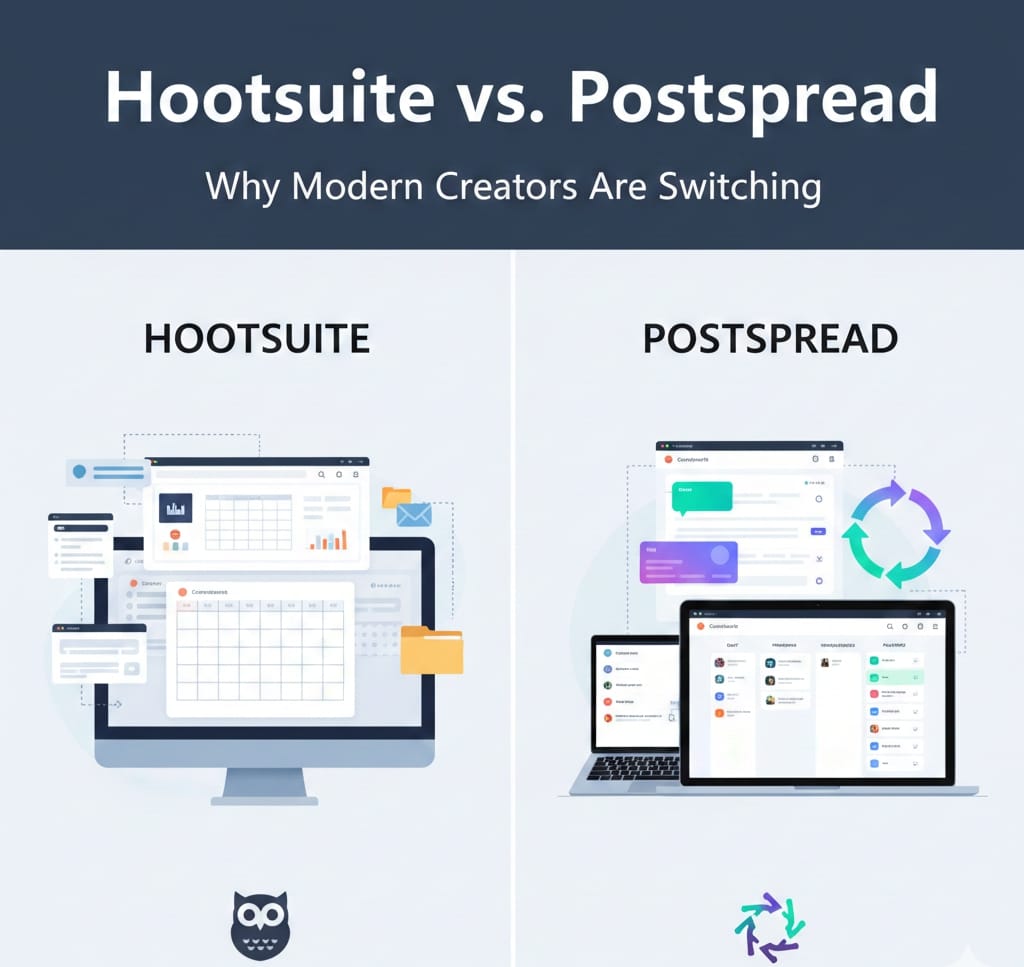
Hootsuite has been around for a long time. It helped many teams organise social media when things were simpler. However, newer platforms like Postspread are gaining attention because they reflect how creators actually work today. This comparison explains why many modern creators are moving away from traditional tools and choosing a more flexible workflow.
Why Hootsuite Became So Popular
Hootsuite earned its place by solving a real problem. It brought multiple social media accounts into one dashboard and made scheduling easier. For years, this was enough for most businesses.
Some reasons Hootsuite became widely adopted include:
- It supported several platforms in one place
- It allowed posts to be scheduled ahead of time
- Teams could collaborate on content
- Analytics were available without native platform logins
- For small teams or early-stage businesses, these features were helpful. Hootsuite made social media feel manageable when manual posting was still common.
Where Traditional Tools Struggle
As social media matured, workflows became more complex. Content teams expanded. Clients expected faster approvals. Platforms introduced different formats and posting rules.
This is where many creators began to feel friction.
Common frustrations include:
- Too many steps to publish a single post
- Feedback scattered across emails and chats
- Limited visibility into approval status
- Analytics that require manual interpretation
These issues do not mean Hootsuite is broken. They simply show that it was designed for a different era of social media management
The Shift Toward Workflow-First Platforms
Modern creators think in workflows, not just posts. They want to see content move clearly from idea to approval to publishing. They also want fewer tools and less back-and-forth.
Postspread was built around this mindset. Instead of focusing only on scheduling, it focuses on how teams actually collaborate on content. Everything happens in one shared space, which reduces confusion and saves time.
This workflow-first approach is one of the main reasons creators are switching.
Scheduling For Real Content Teams
Scheduling is where Hootsuite shines, but it treats scheduling as a standalone task. Content is created elsewhere, reviewed elsewhere, and then uploaded for posting.
Postspread connects scheduling directly to content creation and approval. A post does not move forward until it is reviewed. This creates a natural flow that feels easier to manage.
With this approach, teams can:
- See what content is drafted, pending, or approved
- Avoid publishing unreviewed posts
- Maintain consistency across platforms
The result is fewer mistakes and less last-minute stress.
Approvals Without Endless Follow-Ups
One of the biggest time drains for creators is chasing approvals. Emails get missed. Messages get buried. Feedback comes late or out of context.
Postspread solves this by keeping approvals inside the content itself. Comments are tied directly to posts. Approval status is visible at all times.
This helps teams:
- Know exactly who needs to review content
- See which posts are ready to publish
- Reduce repeated clarification messages
Compared to traditional tools, this feels more natural and far less frustrating.
Collaboration That Improves With Teams
Hootsuite allows collaboration, but it can feel limited when teams grow. Managing editors, creators, and clients across multiple accounts quickly becomes complex.
Postspread uses workspaces to separate clients or projects. Each workspace has its own content, comments, and approvals. This structure makes scaling easier.
Benefits of this setup include:
- Cleaner organisation across clients
- Clear responsibility for each post
- Less chance of cross-posting errors
As teams grow, this structure becomes more valuable.
Analytics That Connect to Content Decisions
Analytics are only useful if they influence decisions. Hootsuite provides reports, but turning numbers into action often requires extra steps.
Postspread connects analytics directly to the posts that were scheduled. This allows teams to quickly identify what worked and what did not.
Creators can easily:
- Spot high-performing content
- See platform-specific engagement patterns
- Adjust future posts based on real results
Because analytics live alongside scheduling, insights are easier to apply.
Cross-Platform Posting Without Repetition
Every platform has its own tone and format. Copying the same caption everywhere rarely works well.
Postspread allows creators to adjust captions and visuals per platform while still managing everything from one place. This encourages better content rather than shortcuts.
This approach leads to:
- More natural platform-specific posts
- Better engagement across channels
- Fewer formatting mistakes
Hootsuite supports multi-platform posting, but Postspread makes adaptation easier and more intuitive.
Time Savings That Add Up
The biggest reason creators switch tools is time. Even small delays compound when managing many accounts.
By combining creation, approval, scheduling, and analytics, Postspread reduces unnecessary steps. Teams spend less time managing tools and more time creating.
Time savings often come from:
- Fewer approval follow-ups
- No switching between dashboards
- Clear visibility into content status
Over weeks and months, this difference becomes significant.
Fewer Errors, Better Quality Control
Mistakes on social media are costly. A wrong caption or missed edit can damage trust.
Postspread reduces errors by making approvals mandatory and visible. Nothing goes live without review. This adds a layer of safety that traditional tools often lack.
Quality control improves because:
- Feedback is centralized
- Changes are tracked
- Everyone sees the final version
This matters a lot for agencies and brands.
Flexibility for Campaigns and Trends
Social media moves fast. Trends change quickly, and campaigns need adjustments.
Postspread makes rescheduling and editing easier without breaking the workflow. Posts can be moved, updated, or paused while keeping approvals intact.
This flexibility helps creators stay relevant without chaos.
Why the Switch Is Happening Now
The shift from Hootsuite to Postspread is not about trends. It is about needs. Creators want tools that match how they work today.
They want:
- Clear workflows
- Fewer tools
- Less friction
- Better collaboration
Postspread meets these expectations, which is why adoption continues to grow.
Conclusion
Hootsuite played an important role in shaping social media management. It helped teams organise content when things were simpler. However, modern creators need more than scheduling.
Postspread offers a workflow-driven approach that prioritises collaboration, clarity, and efficiency. By keeping everything in one place, it helps teams save time, reduce errors, and focus on growth.
For creators and agencies managing complex content calendars, the switch is not just logical. It feels necessary.